
About Us

At Study Tech Next, we’re committed to bringing you insightful, up-to-the-minute content across a spectrum of topics that impact our daily lives.

― Advertisement ―

Old Royal Enfield Bullet 1990 vs New Bullet 350 2026: Price, Engine, Gear System, Legendary Sound, Features and Complete Comparison

Dive into the evolution of the Royal Enfield Bullet as we compare the 1990 classic with the 2026 model, highlighting engine advancements and the shift from kick-start to electric start. Discover how these changes impact performance and rideability. Read on to explore the full transformation and decide which Bullet reigns supreme.
HomeNewsWhite House Creates Commission to Design a Proposed NASA-Led United States Space...

White House Creates Commission to Design a Proposed NASA-Led United States Space Academy

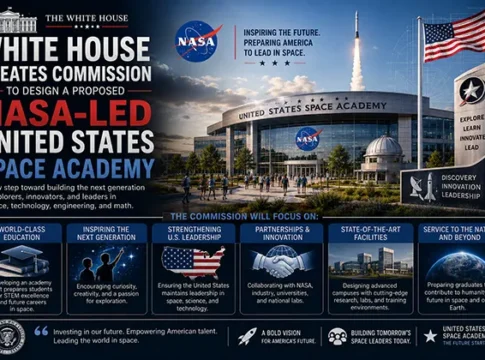
The White House has taken a significant step towards advancing the United States’ position in space exploration and education by establishing a presidential commission to design a proposed NASA-led United States Space Academy. This executive action, announced on August 28, sets the stage for a comprehensive evaluation of how such an academy could be structured and implemented. The commission’s mandate includes a 120-day period to provide recommendations on various critical aspects, from governance to curriculum, and its potential impact on students, universities, and the aerospace workforce. Understanding the Commission’s Mandate The newly formed commission has been tasked with a detailed exploration of the feasibility and framework for a United States Space Academy. Over the next 120 days, the commission will focus on several key areas:
  • Governance and Accreditation: Establishing a robust governance structure and accreditation standards to ensure the academy’s credibility and effectiveness.
  • Curriculum Development: Designing a curriculum that integrates advanced space science, technology, engineering, and mathematics (STEM) education.
  • Admissions and Service Obligations: Defining criteria for student admissions and potential service obligations post-graduation.
  • Location and Infrastructure: Identifying suitable locations and necessary infrastructure for the academy.
  • Legislation and Implementation Timing: Proposing legislative measures and a timeline for implementation.
Potential Benefits and Impacts The establishment of a NASA-led Space Academy could yield numerous benefits for education and national capabilities. By fostering a new generation of space professionals, the academy would enhance the United States’ competitive edge in the global aerospace sector. Students would gain access to cutting-edge education and training, preparing them for careers in space exploration and related fields. Additionally, the academy could serve as a catalyst for innovation and collaboration between universities, NASA, and the aerospace industry. Funding and Duplication Concerns While the potential benefits are significant, the commission must also address concerns related to funding and duplication of existing programs. Securing adequate funding will be crucial to the academy’s success, and the commission will need to explore various funding models. Additionally, it is essential to ensure that the academy complements rather than duplicates existing space-degree programs offered by universities. Access and Political-Governance Risks Access to the academy and its resources must be equitable, ensuring that students from diverse backgrounds can benefit from its offerings. The commission will also need to navigate potential political and governance challenges, ensuring that the academy operates with transparency and accountability. Comparisons with Military Service Academies The proposed Space Academy draws parallels with existing military service academies, such as West Point and the Naval Academy. Like these institutions, the Space Academy would aim to produce highly skilled professionals dedicated to national service. However, the focus on space exploration and technology sets it apart, requiring a unique approach to curriculum and training. Practical Stakeholder Considerations Engaging with stakeholders, including educational institutions, industry leaders, and policymakers, will be vital to the commission’s success. Their insights and expertise can help shape a comprehensive and practical framework for the academy. Collaboration with existing space-degree programs can also provide valuable lessons and avoid potential pitfalls.

“The establishment of a NASA-led Space Academy represents a bold step forward in preparing the next generation of space explorers and innovators.” – Expert in Aerospace Education

Future Implications and Next Steps The commission’s findings will play a crucial role in determining the feasibility and future of the United States Space Academy. However, it is important to note that the commission itself has been established, not the academy. Implementation will depend on further legal and funding decisions. As the commission progresses, its recommendations could shape the future of space education and the nation’s capabilities in space exploration. In conclusion, the White House’s initiative to create a commission for a NASA-led United States Space Academy marks a pivotal moment in space education. By addressing governance, curriculum, and funding challenges, the commission’s work could pave the way for a transformative educational institution that strengthens the nation’s aerospace workforce and innovation capacity.