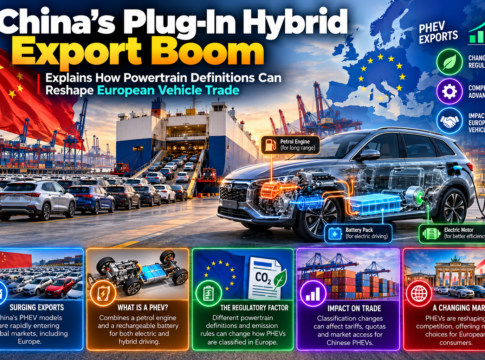
China’s automotive industry is experiencing a significant surge in the export of Plug-In Hybrid Electric Vehicles (PHEVs) to Europe. This growth is reshaping the landscape of vehicle trade between China and Europe, driven by evolving powertrain definitions and regulatory frameworks. In this article, we explore the dynamics of this export boom and its implications for the future of European vehicle trade.
Key Highlights
- On October 12, a report highlighted the rapid growth of Chinese PHEV exports to Europe.
- The first half of the year saw a significant increase in export value, reflecting strong demand.
- Current tariff treatments favor PHEVs, offering competitive pricing advantages.
- Potential curbs on exports are being discussed under China–EU trade arrangements.
- Unresolved implementation details could impact future trade dynamics.
- Chinese automakers are leveraging advanced technology to gain a foothold in European markets.
- Regulatory changes could reshape vehicle flows and market positioning.
What You Will Learn
- Differences between Battery Electric Vehicles (BEVs) and PHEVs.
- The role of series and parallel hybrids in the automotive market.
- How customs classifications affect vehicle imports and exports.
- The importance of local content in determining trade benefits.
- Emissions testing standards and their impact on vehicle approval.
- Trade remedies and their influence on market access.
How and Why It Works
A vehicle’s powertrain category plays a crucial role in determining applicable duties and market positioning. PHEVs, which combine an electric motor with a traditional engine, benefit from favorable tariff treatments due to their lower emissions and fuel efficiency. This advantage allows Chinese automakers to offer competitive pricing in European markets, enhancing their appeal to environmentally conscious consumers.
Practical Applications
For buyers and students, understanding the differences in powertrain and policy is essential. Below is a comparison table highlighting key aspects:
| Powertrain Type |
Customs Classification |
Local Content Requirement |
Emissions Testing |
| BEV |
Zero Emissions |
High |
Strict |
| PHEV |
Low Emissions |
Moderate |
Moderate |
| Series Hybrid |
Variable |
Variable |
Moderate |
| Parallel Hybrid |
Variable |
Variable |
Moderate |
Limitations and Misconceptions
It’s important to note that reported negotiations between China and the EU are not final rules. Additionally, the export value does not equate to profit or direct consumer demand. These factors must be considered when analyzing the market dynamics.
Learning Takeaways
- How will changes in powertrain definitions affect future trade agreements?
- What impact will regulatory changes have on vehicle pricing and availability?
- How can consumers benefit from understanding powertrain classifications?
- What role will emissions testing play in shaping market access?
In conclusion, China’s PHEV export boom is a testament to the evolving landscape of global vehicle trade. By understanding the nuances of powertrain definitions and regulatory frameworks, stakeholders can better navigate the complexities of this dynamic market.
FAQs
- What are PHEVs? Plug-In Hybrid Electric Vehicles combine an electric motor with a traditional engine for improved efficiency.
- Why are Chinese PHEVs popular in Europe? Favorable tariffs and advanced technology make them an attractive option.
- What are the potential trade curbs? Ongoing negotiations may lead to new regulations affecting exports.
As the automotive industry continues to evolve, staying informed about regulatory changes and market trends will be crucial for consumers and industry professionals alike.