
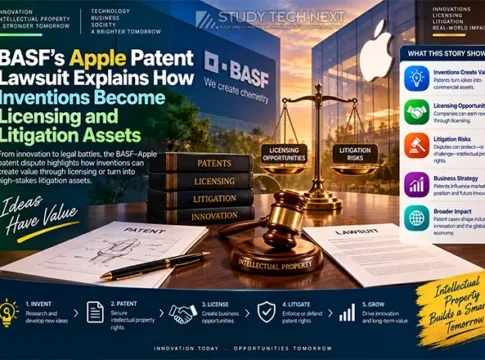

In a world where technology and innovation drive business success, patents have become crucial assets for companies. The recent lawsuit filed by BASF against Apple over iPhone face-authentication patents sheds light on how inventions transition into licensing and litigation assets. This case not only highlights the complexities of patent ownership and infringement but also underscores the strategic importance of patents in the tech industry.
Key Highlights
– BASF’s lawsuit against Apple involves allegations of patent infringement related to iPhone face-authentication technology.
– The patents in question are claimed to be owned by BASF, highlighting the importance of clear patent ownership.
– Licensing agreements and negotiations play a critical role in resolving patent disputes.
– Infringement allegations require thorough examination of technical similarities and legal interpretations.
– Validity challenges are a common defense strategy in patent litigation.
– The litigation process involves multiple stages, including filing, discovery, and trial.
– Filing a complaint does not automatically prove infringement; it initiates a legal process.
– The outcome of such cases can significantly impact business strategies and market positions.
What You Will Learn
– Understand the intricacies of patent claims and their role in technology disputes.
– Explore the significance of patent ownership and its implications for businesses.
– Learn about the process and importance of licensing in the tech industry.
– Gain insights into how infringement allegations are assessed and defended.
– Discover the stages of patent litigation and what each entails.
– Differentiate between technical similarities and legal conclusions in patent cases.
– Recognize the business implications of patent disputes on market dynamics.
– Hear expert perspectives on the strategic use of patents as litigation assets.
Understanding Patent Claims and Ownership
Patents are legal documents that grant inventors exclusive rights to their inventions. In the case of BASF versus Apple, the patents in question pertain to face-authentication technology used in iPhones. Patent claims define the scope of the invention and are crucial in determining whether an infringement has occurred. Clear ownership of these patents is essential, as it establishes who has the right to enforce them.
The Role of Licensing in Patent Disputes
Licensing is a common practice in the tech industry, allowing companies to use patented technology without infringing on the patent holder’s rights. In disputes like the one between BASF and Apple, licensing negotiations can be a pathway to resolution. Successful licensing agreements can prevent costly litigation and foster collaborative innovation.
Infringement Allegations and Validity Challenges
When a company alleges patent infringement, it claims that another entity is using its patented technology without permission. However, filing a complaint is just the beginning. The accused party often challenges the validity of the patent, arguing that it should not have been granted in the first place. This defense strategy can be pivotal in the outcome of the case.
Stages of Patent Litigation
Patent litigation is a multi-stage process. It begins with the filing of a complaint, followed by the discovery phase, where both parties gather evidence. The case may then proceed to trial, where a judge or jury determines the outcome. Each stage requires careful legal and technical analysis to build a compelling case.
Business Implications of Patent Disputes
Patent disputes can have significant business implications. They can affect a company’s market position, influence stock prices, and alter competitive dynamics. For tech giants like Apple, the outcome of such cases can impact product development and strategic planning. Companies must weigh the risks and benefits of litigation versus settlement.
Expert Perspectives on Patents as Litigation Assets
Experts in intellectual property law emphasize the strategic use of patents as litigation assets. Patents can be leveraged to protect market share, generate revenue through licensing, and deter competitors. However, they also caution that litigation can be unpredictable and costly, requiring a well-thought-out strategy.
FAQs
– **What is a patent?** A patent is a legal right granted to an inventor, allowing them to exclude others from making, using, or selling their invention for a certain period.
– **How does a company prove patent infringement?** Proving infringement involves demonstrating that the accused product or process falls within the scope of the patent claims.
– **What are the potential outcomes of a patent lawsuit?** Outcomes can include a court ruling, settlement, licensing agreement, or invalidation of the patent.
– **Why are patents important for businesses?** Patents protect innovations, provide competitive advantages, and can be monetized through licensing.
– **Can a patent be challenged after it is granted?** Yes, patents can be challenged on grounds of invalidity, often during litigation.
In conclusion, BASF’s lawsuit against Apple over face-authentication patents illustrates the complex interplay between innovation, legal strategy, and business dynamics. Understanding how inventions become licensing and litigation assets is crucial for navigating the tech industry’s competitive landscape. As this case unfolds, it will offer valuable insights into the strategic use of patents in protecting and advancing technological advancements.