
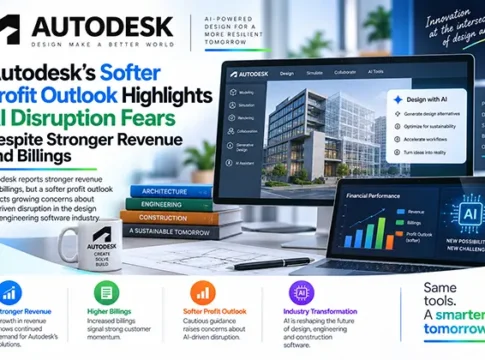

Autodesk’s recent financial results have sparked a mix of optimism and concern among investors and industry analysts. While the company reported stronger-than-expected revenue and raised its annual billings guidance, its softer profit outlook has highlighted fears of AI disruption in the design software industry. This article delves into Autodesk’s August 27 results, the implications of its third-quarter profit forecast, and the broader impact of AI on its business and customers.
Autodesk’s Financial Performance: A Closer Look
On August 27, Autodesk announced its second-quarter financial results, showcasing a robust performance with stronger-than-expected revenue. The company reported a significant increase in revenue, driven by its core design software offerings. Additionally, Autodesk raised its annual billings guidance, reflecting confidence in its ongoing business momentum.
Third-Quarter Profit Forecast and Analyst Estimates
Despite the positive revenue figures, Autodesk’s third-quarter adjusted-profit forecast of $3.04–$3.09 per share fell short of analyst estimates. This discrepancy has raised concerns among investors, as it suggests potential challenges in maintaining profitability amidst evolving market dynamics. Analysts had anticipated a slightly higher profit range, which has led to a cautious outlook on Autodesk’s near-term financial performance.
AI Disruption Fears: A Double-Edged Sword
The design software industry is undergoing a transformative phase, with AI playing a pivotal role in reshaping traditional workflows. While AI offers opportunities for enhanced efficiency and innovation, it also poses competitive and pricing risks for established players like Autodesk. The company’s softer profit outlook underscores the potential impact of AI disruption on its business model and customer base.
Opportunities for AI-Assisted Architecture and Engineering
AI technologies are revolutionizing architecture and engineering by enabling more efficient design processes and reducing manual workloads. Autodesk is well-positioned to leverage these advancements, offering AI-assisted tools that enhance productivity for architects and engineers. However, the company must navigate competitive pressures and execution risks to fully capitalize on these opportunities.
Impact of MaintainX Acquisition Costs
Autodesk’s recent acquisition of MaintainX has introduced additional costs that have impacted its profit outlook. While the acquisition is expected to bolster Autodesk’s capabilities in maintenance and operations management, the associated expenses have contributed to the company’s cautious profit forecast. Investors are closely monitoring how Autodesk integrates MaintainX into its broader portfolio and realizes synergies from the acquisition.
Analyst Perspectives and Market Concerns
Industry analysts have expressed mixed views on Autodesk’s financial outlook. While some remain optimistic about the company’s long-term growth prospects, others are wary of the challenges posed by AI disruption and competitive pressures. The divergence in analyst opinions reflects broader market concerns about the sustainability of Autodesk’s growth trajectory in an increasingly AI-driven landscape.
FAQs: Understanding Autodesk’s Current Position“Autodesk’s ability to adapt to AI-driven changes in the design software industry will be crucial for its future success,” noted a leading industry analyst.
- What are the key factors affecting Autodesk’s profit outlook? The primary factors include costs related to the MaintainX acquisition, competitive pressures, and the impact of AI disruption on its business model.
- How is AI impacting Autodesk’s business? AI is both an opportunity and a challenge for Autodesk, offering potential for innovation while also introducing competitive and pricing risks.
- What are analysts saying about Autodesk’s future? Analysts have mixed views, with some optimistic about long-term growth and others concerned about near-term challenges. Future Implications for Autodesk and the Industry As Autodesk navigates the complexities of AI disruption and competitive dynamics, its ability to innovate and adapt will be critical. The company’s focus on AI-assisted tools and strategic acquisitions like MaintainX will play a pivotal role in shaping its future trajectory. Investors and industry stakeholders will be closely watching Autodesk’s next moves as it seeks to balance growth opportunities with the challenges of an evolving market landscape. In conclusion, Autodesk’s softer profit outlook amidst stronger revenue and billings highlights the nuanced challenges and opportunities presented by AI disruption. As the company continues to innovate and adapt, its strategic decisions will be instrumental in determining its long-term success in the design software industry.