
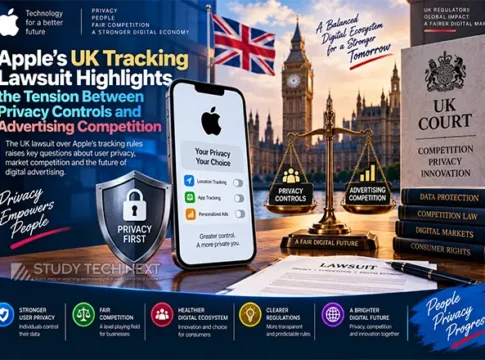
Apple’s recent legal battle in the UK has brought to light the complex interplay between privacy controls and advertising competition. The $2.7 billion lawsuit, reported by Reuters on September 3, 2026, challenges Apple’s app-tracking rules, raising significant questions about consumer privacy, platform power, and the future of digital advertising. This article delves into the intricacies of the case, exploring the allegations, the competing arguments, and the broader implications for app developers and users.
Key Highlights
- Apple faces a $2.7 billion lawsuit in the UK over its app-tracking rules.
- The lawsuit claims Apple’s privacy controls are anticompetitive.
- Allegations focus on the impact of tracking consent on advertising attribution.
- Platform power and competition claims are central to the case.
- Damages estimates highlight the financial stakes involved.
- Consumer privacy remains a contentious issue in digital advertising.
- Distinguishing allegations from established wrongdoing is crucial.
- Practical implications for app developers and users are significant.
What You Will Learn
- The legal basis of the $2.7 billion claim against Apple.
- How tracking consent affects advertising attribution.
- The role of platform power in competition claims.
- Arguments for and against the anticompetitive nature of privacy controls.
- Potential damages and their impact on the industry.
- Consumer privacy concerns in the context of app tracking.
- Expert perspectives on the lawsuit and its implications.
- Unresolved questions and future considerations for stakeholders.
Understanding the Allegations
The lawsuit against Apple centers on the claim that its app-tracking rules, which require explicit user consent for tracking, are anticompetitive. The plaintiffs argue that these rules unfairly disadvantage smaller advertisers and app developers by limiting their ability to effectively target and measure advertising campaigns. This, they claim, consolidates Apple’s power in the digital advertising space.
Tracking Consent and Advertising Attribution
At the heart of the lawsuit is the issue of tracking consent. Apple’s App Tracking Transparency (ATT) framework mandates that apps must obtain user permission before tracking their data across other companies’ apps and websites. While this enhances consumer privacy, critics argue it hampers advertising attribution, making it difficult for advertisers to assess the effectiveness of their campaigns.
Platform Power and Competition Claims
The lawsuit also raises questions about platform power. By controlling the terms of app tracking, Apple is accused of leveraging its dominant position to stifle competition. The plaintiffs contend that this control allows Apple to prioritize its own advertising services, potentially leading to a less competitive market.
Competing Arguments
While the plaintiffs argue that Apple’s privacy controls are anticompetitive, Apple defends its policies as necessary for protecting user privacy. The company asserts that its ATT framework empowers users to make informed choices about their data, aligning with broader privacy trends and regulations.
Privacy Controls vs. Anticompetitive Practices
The debate over whether privacy controls are inherently anticompetitive is complex. Proponents of Apple’s policies argue that prioritizing user consent is a legitimate business practice that aligns with consumer expectations and legal standards. Critics, however, suggest that such controls can inadvertently limit competition by restricting data access for smaller players.
Practical Implications for App Developers and Users
The outcome of this lawsuit could have far-reaching implications for app developers and users. Developers may need to adapt their strategies to comply with evolving privacy standards, while users could see changes in how their data is managed and used for advertising purposes.
Expert Perspectives
Industry experts are divided on the potential impact of the lawsuit. Some believe it could lead to more stringent regulations on data privacy, while others argue it might prompt a reevaluation of how digital advertising operates. The case underscores the ongoing tension between innovation, competition, and consumer rights.
FAQs and Unresolved Questions
- What is the basis of the lawsuit against Apple? The lawsuit claims Apple’s app-tracking rules are anticompetitive and harm smaller advertisers.
- How does tracking consent affect advertising? It impacts the ability to measure and target advertising campaigns effectively.
- What are the potential outcomes of the lawsuit? Possible outcomes include changes in privacy regulations and advertising practices.
- How might this affect app developers? Developers may need to adjust their data strategies to align with new privacy standards.
- What are the broader implications for consumers? Consumers could experience changes in data privacy and advertising personalization.
In conclusion, Apple’s UK tracking lawsuit highlights the delicate balance between privacy controls and advertising competition. As the case unfolds, it will be crucial to monitor its implications for the digital advertising landscape, consumer privacy, and the power dynamics within the tech industry. The outcome could redefine how companies navigate the intersection of privacy and competition in the digital age.