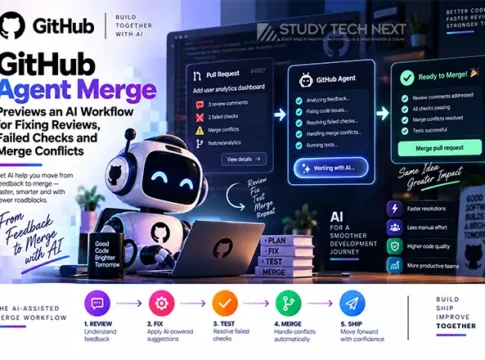

GitHub’s latest innovation, the GitHub Agent Merge, is set to revolutionize the way developers handle pull requests, failed checks, and merge conflicts. Announced on September 4, 2026, this public preview introduces an AI-driven workflow designed to streamline code reviews and enhance productivity. As developers and maintainers navigate the complexities of modern software development, this tool promises to address common challenges while maintaining the integrity and security of the codebase.
Key Highlights
– **Date:** September 4, 2026, marks the public preview of GitHub Agent Merge.
– **Preview Status:** Currently in public preview, allowing developers to test its capabilities.
– **Capabilities:** Automates the resolution of pull-request feedback, failed checks, and merge conflicts.
– **Availability:** Accessible to developers and maintainers for testing and feedback.
– **Benefits:** Enhances productivity by reducing manual intervention in code reviews.
– **Risks:** Potential supply-chain risks and the need for human oversight remain.
What You Will Learn
– Understand the intricacies of pull requests and their role in collaborative development.
– Explore continuous integration and its importance in maintaining code quality.
– Learn how merge conflicts occur and strategies for resolving them.
– Discover the permissions required for the GitHub Agent to operate effectively.
– Recognize the importance of human-in-the-loop review for ensuring code accuracy.
The GitHub Agent Merge: A New Era in Code Management
The GitHub Agent Merge is designed to tackle three major pain points in the software development lifecycle: addressing pull-request feedback, resolving failed automated checks, and managing merge conflicts. By leveraging AI, this tool aims to automate these processes, allowing developers to focus on more strategic tasks.
Addressing Pull-Request Feedback
Pull requests are essential for collaborative development, enabling team members to review and discuss code changes before they are merged into the main branch. The GitHub Agent Merge automates the process of addressing feedback, ensuring that suggestions and corrections are implemented efficiently. This reduces the time developers spend on manual revisions and accelerates the overall development process.
Resolving Failed Checks
Continuous integration (CI) is a critical component of modern software development, ensuring that code changes do not introduce new bugs or break existing functionality. The GitHub Agent Merge identifies and resolves issues that cause automated checks to fail, maintaining the integrity of the codebase and reducing the need for manual intervention.
Managing Merge Conflicts
Merge conflicts occur when changes from different branches conflict with each other, requiring manual resolution. The GitHub Agent Merge uses AI to intelligently resolve these conflicts, minimizing disruptions and maintaining the flow of development. This capability is particularly beneficial in large projects with multiple contributors.
Balancing Automation with Human Oversight
While the GitHub Agent Merge offers significant productivity benefits, it is crucial to maintain a balance between automation and human oversight. Developers and maintainers must set appropriate permission boundaries to ensure that the agent operates within defined limits. Additionally, human-in-the-loop review remains essential for verifying the accuracy and quality of code changes.
Permission Boundaries and Review Accuracy
Setting clear permission boundaries is vital to prevent unauthorized changes and maintain control over the codebase. The GitHub Agent Merge requires specific permissions to function, and developers must configure these settings carefully. Furthermore, human reviewers play a critical role in ensuring that automated changes meet the project’s standards and requirements.
Supply-Chain Risks and Security Considerations
As with any automated tool, the GitHub Agent Merge introduces potential supply-chain risks. Developers must remain vigilant and implement security best practices to mitigate these risks. Regular audits and monitoring can help identify and address vulnerabilities, ensuring the safety and reliability of the software supply chain.
Practical Safe-Workflow Example
To effectively integrate the GitHub Agent Merge into your workflow, consider setting up a sandbox repository for testing. This allows you to experiment with the agent’s capabilities in a controlled environment, minimizing the risk of unintended changes to your main codebase. Remember, while automation can significantly enhance productivity, it is not a substitute for human judgment and expertise.
“What can we learn from this topic? Automation enhances efficiency, but human oversight ensures correctness and security.”
Misconceptions about automatic correctness can lead to over-reliance on AI tools. Developers should remain engaged in the review process, using automation as a complement to their expertise rather than a replacement. By combining the strengths of AI and human insight, teams can achieve optimal results.
In conclusion, the GitHub Agent Merge represents a significant advancement in software development, offering tools to streamline workflows and enhance productivity. However, the continuing need for human approval and testing underscores the importance of maintaining a balanced approach. By leveraging the capabilities of AI while upholding rigorous review standards, developers can navigate the complexities of modern software development with confidence.

Welcome to Study Tech Next
Welcome to Study Tech Next, your go-to source for the latest in technology, finance, science, and education. We bring you up-to-date tech news, detailed stock market insights, and a wide range of study resources designed to empower both learners and professionals.
Welcome to Study Tech Next
Welcome to Study Tech Next, your go-to source for the latest in technology, finance, science, and education. We bring you up-to-date tech news, detailed stock market insights, and a wide range of study resources designed to empower both learners and professionals.
Welcome to Study Tech Next
Welcome to Study Tech Next, your go-to source for the latest in technology, finance, science, and education. We bring you up-to-date tech news, detailed stock market insights, and a wide range of study resources designed to empower both learners and professionals.
Welcome to Study Tech Next
Welcome to Study Tech Next, your go-to source for the latest in technology, finance, science, and education. We bring you up-to-date tech news, detailed stock market insights, and a wide range of study resources designed to empower both learners and professionals.
Subscribe for exclusive content
Welcome to Study Tech Next, your go-to source for the latest in technology, finance, science, and education. We bring you up-to-date tech news, detailed stock market insights, and a wide range of study resources designed to empower both learners and professionals.
© 2024 StudyTechNext