
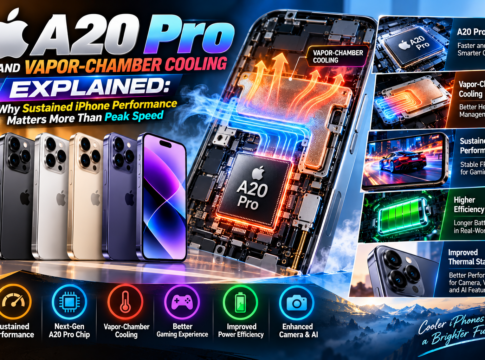

Apple’s latest innovation, the A20 Pro chip, introduced on September 9, 2026, in the iPhone 18 Pro series, marks a significant leap in smartphone technology. This advancement, coupled with next-generation vapor-chamber cooling, promises to redefine sustained performance, emphasizing consistent efficiency over mere peak speed. In this article, we delve into the intricacies of these technologies and their implications for users.
Key Highlights
- Announcement Date: September 9, 2026
- Supported iPhones: iPhone 18 Pro series
- A20 Pro Chip: Faster and smarter processing capabilities
- Vapor-Chamber Cooling: Enhanced heat management
- Apple Intelligence: Improved AI and Siri functionalities
- Camera Processing: Superior image and video quality
- Battery Claims: Longer battery life in real-world use
- Availability: Immediate release post-announcement
- Sustained Performance: Importance over peak speed
- Thermal Throttling: How it’s minimized
- Heat Transfer: Efficient management through vapor-chamber
- CPU/GPU/Neural Engine Workloads: Optimized for performance
- Memory and Power Management: Enhanced efficiency
- Privacy Implications: Secure on-device processing
- Future Implications: Potential for upcoming technologies
- Gaming: Stable FPS and enhanced graphics performance
- Video Recording: Longer recording times without overheating
- AI Processing: Faster and more efficient AI tasks
- Navigation: Improved GPS accuracy and reliability
- Prolonged Camera Use: Consistent quality in extended sessions
In conclusion, the A20 Pro chip and vapor-chamber cooling system represent a significant advancement in smartphone technology, prioritizing sustained performance and efficiency. As users explore these features, they can expect a more reliable and powerful iPhone experience.“Cooler iPhones for a Brighter Future” – Apple’s commitment to innovation and user experience.