
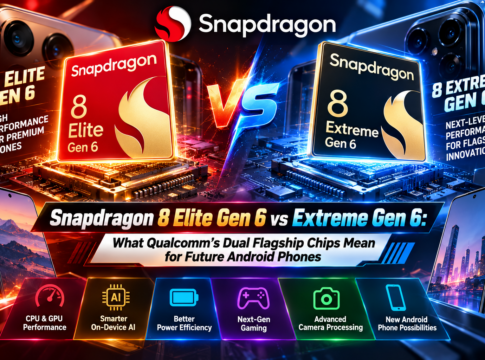

In the rapidly evolving world of mobile technology, Qualcomm has once again set the stage for innovation with the introduction of its dual flagship chips: the Snapdragon 8 Elite Gen 6 and the Snapdragon 8 Extreme Gen 6. Announced on September 22, 2026, these cutting-edge platforms promise to redefine the capabilities of future Android smartphones. This article delves into the specifics of these chips, exploring their unique features and what they mean for the next generation of mobile devices.
Key Highlights
- Announcement Date: September 22, 2026
- Two-Chip Strategy: Snapdragon 8 Elite Gen 6 and Snapdragon 8 Extreme Gen 6
- Oryon CPU: Enhanced processing power for demanding tasks
- Adreno GPU: Superior graphics performance for gaming and multimedia
- Hexagon NPU: Advanced AI capabilities for smarter on-device processing
- Imaging Capabilities: Cutting-edge camera processing features
- X105 5G Modem: Next-level connectivity for seamless internet access
- Expected Device Adoption: Premium and flagship Android smartphones
- Understanding SoCs: The role of system-on-chips in modern smartphones
- CPU/GPU/NPU Roles: How these components enhance performance
- Process Nodes: The significance of advanced manufacturing techniques
- Agentic AI: The impact of AI on user experience and device functionality
- Memory Bandwidth: Importance for multitasking and high-speed data access
- Image-Signal Processors: Enhancing photography and video capabilities
- Modem Integration: Ensuring robust and reliable connectivity
- Sustained Performance: Look for devices that maintain high performance under load
- Battery Efficiency: Prioritize phones with optimized power consumption
- Camera Processing: Choose models with advanced imaging capabilities
- Software Support: Ensure regular updates for security and functionality
- Thermal Management: Consider devices with effective heat dissipation