
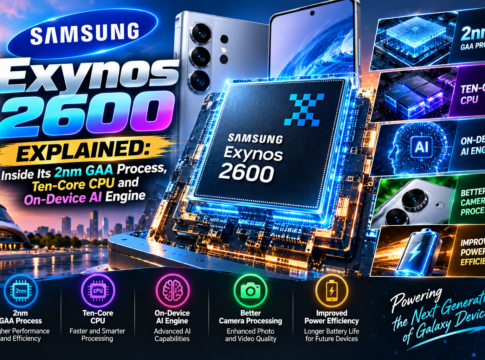

Samsung’s Exynos 2600 is set to revolutionize mobile processing with its cutting-edge technology. This article delves into the intricacies of the Exynos 2600, highlighting its 2nm GAA process, ten-core CPU, and on-device AI engine. Discover how these advancements promise to enhance performance, efficiency, and user experience in the next generation of Galaxy devices.
Key Highlights
- 2nm GAA manufacturing process for higher performance and efficiency
- Arm C1-Ultra and C1-Pro cores in a ten-core configuration
- Samsung claims a 113% improvement in generative AI capabilities
- Ray tracing support for enhanced graphics
- ExecuTorch support for advanced AI processing
- Hardware-backed post-quantum protection for enhanced security
- Understanding GAA transistors and their impact on electrical control
- Insights into CPU core scheduling and instruction per cycle (IPC)
- Role of NPUs in processing on-device AI models
- Ray tracing technology and its application in mobile gaming
- Post-quantum cryptography and its importance in security
- How does the Exynos 2600 improve performance and efficiency?
- What are the implications of heat management on device performance?
- How does battery life vary with different workloads?
- What security features does the Exynos 2600 offer?
- What is the long-term support plan for devices using this processor?