
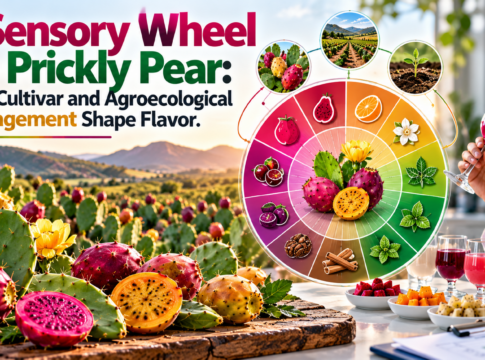
The study titled “A Sensory Wheel for Prickly Pear: How Cultivar and Agroecological Management Shape Flavor” explores the intricate sensory attributes of prickly pear fruit cultivated under semidesert conditions in Mexico. Accepted on October 7, 2026, this research provides a comprehensive sensory lexicon for prickly pear, offering valuable insights for growers, students, and processors alike.
Key Highlights
- Accepted on October 7, 2026, focusing on semidesert agroecological conditions in Mexico.
- Examined various cultivars of prickly pear.
- Utilized a trained 35-person panel to assess sensory attributes.
- Identified 41 distinct sensory attributes.
- Employed repeated-measures analysis for data accuracy.
- Utilized Principal Component Analysis (PCA) to interpret results.
- Discussed study limitations and potential areas for further research.
What You Will Learn
- Development of sensory lexicons for prickly pear.
- Establishment of reference standards for sensory evaluation.
- Training methodologies for sensory panels.
- Impact of different cultivars on flavor profiles.
- Influence of agroecological conditions on sensory attributes.
- Application of ANOVA in sensory data analysis.
- Control of false-discovery rates in sensory studies.
- Use of PCA for comprehensive data interpretation.
How and Why It Works
Trained sensory panels play a crucial role in converting subjective perceptions of aroma, taste, texture, and aftertaste into reproducible data. By using a structured approach, these panels ensure that sensory evaluations are consistent and reliable, providing a robust framework for understanding the complex flavors of prickly pear.
Practical Applications
For growers, students, and processors, this study offers a template for planning safe sensory studies. Key considerations include addressing allergies, ensuring proper sanitation, assessing fruit ripeness, and accounting for local climate conditions. These factors are essential for conducting effective and meaningful sensory evaluations.
Limitations and Misconceptions
It is important to distinguish between trained descriptive analysis and consumer liking studies. While the former provides detailed sensory profiles, the latter focuses on consumer preferences. Additionally, accepted manuscripts differ from final formatted records, and cultivar associations should not be mistaken for universal flavor rules.
Learning Takeaways
Engage in a sensory-wheel activity using familiar, safely sourced fruits to explore sensory attributes. Consider questions for future multi-location research to expand understanding of how different environments influence prickly pear flavor.
In conclusion, the study on prickly pear provides a detailed sensory framework that highlights the impact of cultivar and agroecological management on flavor. This research not only advances scientific understanding but also offers practical applications for the agricultural and food industries.
முக்கிய அம்சங்கள்
- 2026 அக்டோபர் 7 அன்று ஏற்றுக்கொள்ளப்பட்டது, மெக்சிகோவில் அரைமருத நிலை சூழலில் கவனம் செலுத்துகிறது.
- பல்வேறு ப்ரிக்கிளி பேரின் வகைகளை ஆய்வு செய்தது.
- 35 பேர் கொண்ட பயிற்சி பெற்ற குழுவை பயன்படுத்தியது.
- 41 தனித்துவமான சென்சரி பண்புகளை கண்டறிந்தது.
- தரவு துல்லியத்திற்காக மீண்டும் அளவீட்டு பகுப்பாய்வை பயன்படுத்தியது.
- முதன்மை கூறு பகுப்பாய்வை (PCA) பயன்படுத்தியது.
- ஆய்வின் வரம்புகள் மற்றும் மேலும் ஆராய்ச்சி செய்ய வேண்டிய பகுதிகளை விவாதித்தது.
நீங்கள் என்ன கற்றுக்கொள்வீர்கள்
- ப்ரிக்கிளி பேருக்கான சென்சரி லெக்சிகான்களின் மேம்பாடு.
- சென்சரி மதிப்பீட்டிற்கான குறிப்பு தரநிலைகள்.
- சென்சரி குழுக்களின் பயிற்சி முறைகள்.
- வகைகள் சுவை சுயவிவரங்களில் ஏற்படுத்தும் தாக்கம்.
- அக்ரோஎகாலஜிக்கல் நிலைமைகள் சென்சரி பண்புகளில் ஏற்படுத்தும் தாக்கம்.
- சென்சரி தரவுப் பகுப்பாய்வில் ANOVA பயன்பாடு.
- சென்சரி ஆய்வுகளில் தவறான கண்டுபிடிப்பு விகிதங்களை கட்டுப்படுத்தல்.
- முழுமையான தரவுப் பகுப்பாய்விற்கான PCA பயன்பாடு.
எப்படி மற்றும் ஏன் இது வேலை செய்கிறது
பயிற்சி பெற்ற சென்சரி குழுக்கள், வாசனை, சுவை, அமைப்பு மற்றும் பிந்தைய சுவை ஆகியவற்றின் கருத்துக்களை மறுபடியும் தரவாக மாற்றுவதில் முக்கிய பங்கு வகிக்கின்றன. கட்டமைக்கப்பட்ட அணுகுமுறையைப் பயன்படுத்துவதன் மூலம், இந்த குழுக்கள் சென்சரி மதிப்பீடுகள் நிலையான மற்றும் நம்பகமானவை என்பதை உறுதிசெய்கின்றன.
நடைமுறை பயன்பாடுகள்
வளர்ப்பவர்கள், மாணவர்கள் மற்றும் செயலாக்கிகள், இந்த ஆய்வு பாதுகாப்பான சென்சரி ஆய்வுகளை திட்டமிடுவதற்கான மாதிரியை வழங்குகிறது. முக்கிய கருத்துக்கள் அலர்ஜிகளை முகாமை செய்வது, சரியான சுகாதாரத்தை உறுதிசெய்வது, பழத்தின் பழுத்த நிலையை மதிப்பீடு செய்வது மற்றும் உள்ளூர் காலநிலையை கணக்கில் எடுத்துக்கொள்வது ஆகியவை அடங்கும்.
வரம்புகள் மற்றும் தவறான கருத்துக்கள்
பயிற்சி பெற்ற விவரண பகுப்பாய்வு மற்றும் நுகர்வோர் விருப்ப ஆய்வுகளை வேறுபடுத்துவது முக்கியம். முன்னாள் விரிவான சென்சரி சுயவிவரங்களை வழங்கினாலும், பிந்தையது நுகர்வோர் விருப்பங்களை மையமாகக் கொண்டுள்ளது. மேலும், ஏற்றுக்கொள்ளப்பட்ட கையெழுத்துக்கள் இறுதி வடிவமைக்கப்பட்ட பதிவுகளிலிருந்து மாறுபடுகின்றன.
கற்றல் எடுத்துக்காட்டுகள்
பழக்கமான, பாதுகாப்பாக பெறப்பட்ட பழங்களைப் பயன்படுத்தி சென்சரி சக்கர செயல்பாட்டில் ஈடுபடுங்கள். ப்ரிக்கிளி பேரின் சுவையை வெவ்வேறு சூழல்கள் எவ்வாறு பாதிக்கின்றன என்பதை விரிவுபடுத்த எதிர்கால பல இட ஆய்வுகளுக்கான கேள்விகளை பரிசீலிக்கவும்.
முடிவில், ப்ரிக்கிளி பேரின் ஆய்வு வகை மற்றும் அக்ரோஎகாலஜிக்கல் மேலாண்மை சுவையில் ஏற்படுத்தும் தாக்கத்தை வெளிப்படுத்தும் விரிவான சென்சரி கட்டமைப்பை வழங்குகிறது. இந்த ஆராய்ச்சி அறிவியல் புரிதலை முன்னேற்றுவதோடு, வேளாண்மை மற்றும் உணவு தொழில்களுக்கு நடைமுறை பயன்பாடுகளையும் வழங்குகிறது.