
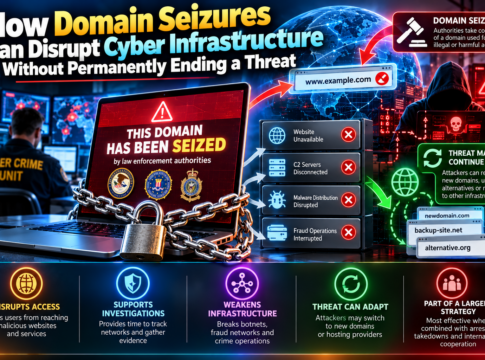

The recent action by the US Justice Department on October 9, 2026, involving the seizure of seven domains allegedly linked to the Integrity Technology Group’s hacking infrastructure, highlights a critical aspect of cybersecurity operations. While domain seizures can significantly disrupt cyber infrastructure, they do not necessarily eliminate the threat permanently. This article delves into the intricacies of such operations, their impact, and the broader implications for cybersecurity strategies.
Key Highlights
– On October 9, 2026, the US Justice Department seized seven domains allegedly connected to Integrity Technology Group.
– The legal process involved obtaining seizure warrants to take control of these domains.
– Government allegations suggest these domains were part of a hacking infrastructure.
– The affected infrastructure included command-and-control systems used for cyber attacks.
– There is uncertainty in attribution, as the company reportedly denied involvement.
– The action disrupted the cyber operations but did not permanently end the threat.
What You Will Learn
– Understanding the role of command-and-control systems in cyber attacks.
– The process and impact of domain resolution and sinkholing.
– How seizure warrants are obtained and executed.
– Identifying indicators of compromise in cyber infrastructure.
– Challenges in attribution and the potential for infrastructure replacement.
How and Why It Works
Taking control of domains can effectively interrupt the communication channels used by cybercriminals. By redirecting traffic from these domains to a controlled environment, authorities can gather valuable intelligence on the attack methods and potentially identify the perpetrators. This process, known as sinkholing, allows for defensive measures to be implemented swiftly, reducing the immediate threat posed by the compromised infrastructure.
Practical Applications
– Regularly review and update system logs to detect unusual activities.
– Ensure all software and systems are patched to the latest versions.
– Strengthen credential management to prevent unauthorized access.
– Monitor official indicators of compromise provided by cybersecurity authorities.
Limitations and Misconceptions
While domain seizures can disrupt cyber operations, they are not equivalent to arresting or convicting the individuals behind the attacks. The infrastructure can often be replaced or reconstituted, allowing the threat actors to resume their activities. It is crucial to understand that such actions are part of a broader strategy to mitigate risks rather than a standalone solution.
Learning Takeaways
– Maintain an evidence-and-response checklist to quickly address potential threats.
– Stay informed about the latest cybersecurity trends and threats.
– Collaborate with cybersecurity experts to enhance defensive strategies.
In conclusion, while domain seizures are a powerful tool in disrupting cyber infrastructure, they are not a panacea. Understanding their role within a comprehensive cybersecurity strategy is essential for effectively mitigating threats and protecting digital assets. By staying vigilant and proactive, organizations can better defend against the evolving landscape of cyber threats.