
About Us

At Study Tech Next, we’re committed to bringing you insightful, up-to-the-minute content across a spectrum of topics that impact our daily lives.

― Advertisement ―

LVMH’s Luxury Slowdown Shows How Brand Concentration and Regional Demand Can Shape a Global Business

Explore how LVMH's luxury slowdown reveals the impact of brand concentration and regional demand shifts on global business strategies. Learn about the risks of over-reliance on key markets like China and how strategic diversification can mitigate these challenges. Discover insights into maintaining business stability and growth.
HomeNewsTechWhy AI Incident Reporting Could Become the Missing Safety Layer for Frontier...

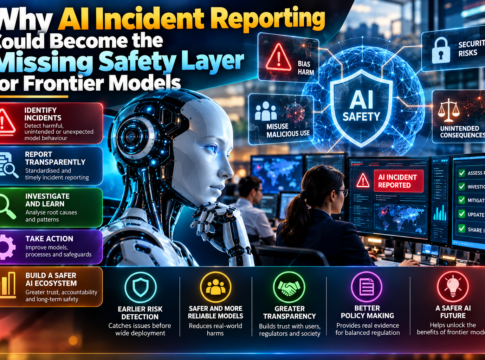
Why AI Incident Reporting Could Become the Missing Safety Layer for Frontier Models

Artificial Intelligence (AI) is rapidly transforming industries, yet its regulation lags behind. According to a Reuters report dated October 12, 2026, Microsoft President Brad Smith argues that AI incident reporting could serve as a crucial safety layer for frontier models, which currently face fewer formal reporting requirements than traditional industries. This article explores why AI incident reporting is essential and how it could shape the future of AI safety. Key Highlights
  • Report Date: October 12, 2026
  • Speaker: Microsoft President Brad Smith
  • Comparison with Existing Regulation: AI faces fewer formal reporting requirements than traditional industries
  • Proposed Incident Reporting: Advocates for standardized AI incident reporting
  • Voluntary Safeguards: Encourages voluntary adoption of reporting practices
  • Affected AI Developers: Frontier model developers are the primary focus
  • Unresolved Policy Questions: How to define incidents and ensure compliance
What You Will Learn
  • Understanding frontier models and their unique challenges
  • Defining AI incidents and the importance of clear definitions
  • The role of near-miss reporting in preventing systemic failures
  • How incident reporting can mitigate systemic risk
  • The importance of transparency in AI operations
  • The value of independent audits in maintaining accountability
  • Ensuring regulatory proportionality to avoid stifling innovation
How and Why It Works Standardized AI incident reports can reveal recurring failures and patterns without necessarily proving causation. By documenting incidents, organizations can identify trends and potential risks, leading to more informed decision-making and improved safety protocols. This approach allows for a proactive stance on AI safety, addressing issues before they escalate into significant problems. Practical Applications To facilitate AI incident reporting, organizations can adopt a standardized template. This template should include fields for incident description, impact assessment, corrective actions, and follow-up measures. Schools, businesses, and software teams can use this template to ensure consistent and comprehensive reporting, fostering a culture of transparency and accountability. Limitations and Misconceptions While Brad Smith advocates for AI incident reporting, it is important to note that this is not yet enacted law. There are risks associated with under-reporting, which can obscure potential dangers, and excessive disclosure, which may overwhelm stakeholders with data. Additionally, inconsistent definitions of what constitutes an AI incident can lead to confusion and ineffective reporting practices. Learning Takeaways
  • What criteria should define an AI incident?
  • How can organizations balance transparency with data privacy?
  • What role should independent audits play in AI incident reporting?
  • How can regulatory frameworks be designed to support innovation while ensuring safety?
In conclusion, AI incident reporting could become the missing safety layer for frontier models, offering a structured approach to identifying and mitigating risks. By adopting standardized reporting practices, organizations can enhance transparency, accountability, and safety in AI operations, paving the way for a more secure technological future.