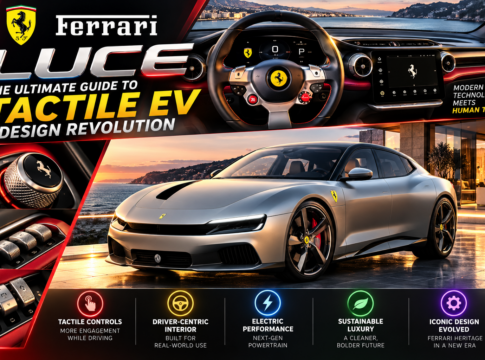

In an era dominated by touchscreens, Ferrari’s latest electric vehicle, the Luce, reintroduces the significance of physical controls. Developed in collaboration with Jony Ive’s LoveFrom, the Luce challenges the conventional norms of electric vehicle design by emphasizing tactile feedback and user-centric interfaces. This article delves into the unique design philosophy of the Ferrari Luce, exploring its implications for the future of automotive interfaces.
Key Highlights
– The Ferrari Luce marks a significant milestone in automotive history, being one of the first electric vehicles from the iconic brand.
– Designed in collaboration with Jony Ive’s LoveFrom, the Luce blends Ferrari’s traditional design ethos with modern technological advancements.
– The vehicle’s platform is built to accommodate electric powertrains, offering a glimpse into Ferrari’s future in the EV market.
– A key design philosophy of the Luce is the reintroduction of physical controls, providing drivers with tactile feedback and reducing reliance on touchscreens.
– Confirmed features include a minimalist dashboard with strategically placed physical buttons, though performance details remain under wraps.
What You Will Learn
– The importance of human-machine interfaces in enhancing driver experience and safety.
– How tactile feedback from physical controls can reduce driver distraction compared to touchscreens.
– The concept of affordance in design, ensuring that controls are intuitive and easy to use.
– Challenges of touchscreen dependency in electric vehicle packaging and design.
How and Why It Works
Physical controls in the Ferrari Luce are strategically designed for frequently used functions, minimizing the need for drivers to take their eyes off the road. This approach not only enhances safety but also improves the overall driving experience. Meanwhile, touchscreens remain valuable for displaying flexible information, adapting to various driving conditions and user preferences.
Practical Applications
In a car showroom, potential buyers can test the Luce’s interface by interacting with buttons, menus, and warning notifications. This hands-on approach allows users to experience the intuitive design and tactile feedback firsthand, highlighting the practical benefits of Ferrari’s design choices.
Limitations and Misconceptions
While physical controls offer significant advantages, they are not inherently safer than touchscreens. Independent usability tests are crucial to validate these claims. It’s important to differentiate between design philosophy and actual user experience, ensuring that the Luce’s interface meets safety and usability standards.
Learning Takeaways
Evaluating the quality of a vehicle’s interface can be guided by an Automotive-Interface Scorecard, which assesses factors such as usability, safety, and driver satisfaction. This tool can help consumers make informed decisions when considering vehicles like the Ferrari Luce.
“Ferrari’s Luce redefines the electric vehicle landscape by harmonizing traditional design with modern technology, emphasizing the importance of tactile feedback in driving.”
In conclusion, the Ferrari Luce represents a bold step forward in automotive design, challenging the dominance of touchscreens with its emphasis on physical controls. As the industry evolves, the Luce’s design philosophy may influence future trends, prioritizing driver engagement and safety. For more insights into automotive innovations, visit studytechnext.com.

Welcome to Study Tech Next
Welcome to Study Tech Next, your go-to source for the latest in technology, finance, science, and education. We bring you up-to-date tech news, detailed stock market insights, and a wide range of study resources designed to empower both learners and professionals.
Welcome to Study Tech Next
Welcome to Study Tech Next, your go-to source for the latest in technology, finance, science, and education. We bring you up-to-date tech news, detailed stock market insights, and a wide range of study resources designed to empower both learners and professionals.
Welcome to Study Tech Next
Welcome to Study Tech Next, your go-to source for the latest in technology, finance, science, and education. We bring you up-to-date tech news, detailed stock market insights, and a wide range of study resources designed to empower both learners and professionals.
Welcome to Study Tech Next
Welcome to Study Tech Next, your go-to source for the latest in technology, finance, science, and education. We bring you up-to-date tech news, detailed stock market insights, and a wide range of study resources designed to empower both learners and professionals.
Subscribe for exclusive content
Welcome to Study Tech Next, your go-to source for the latest in technology, finance, science, and education. We bring you up-to-date tech news, detailed stock market insights, and a wide range of study resources designed to empower both learners and professionals.
© 2024 StudyTechNext