
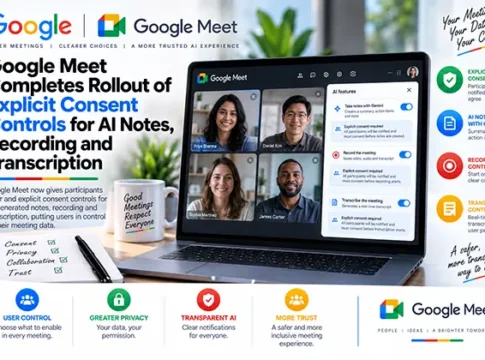

Google Meet has recently completed the rollout of its new explicit consent controls for AI-driven features such as notes, recording, and transcription. This significant update, expected to be fully implemented by August 12, 2026, marks a pivotal step in enhancing user privacy and compliance in virtual meetings. As organizations increasingly rely on digital communication tools, understanding these new controls is crucial for administrators and participants alike.
Understanding the New Consent Controls
The introduction of explicit consent controls in Google Meet is designed to ensure that all participants are aware of and agree to the use of AI features during meetings. This includes AI-generated notes, recording, and transcription services. The rollout aims to address privacy concerns by requiring explicit consent from all meeting participants before these features can be activated.
Administrator Settings
Administrators play a crucial role in configuring these new consent controls. They can enable or disable AI features at the organizational level, ensuring that the use of such tools aligns with company policies and compliance requirements. Administrators can access these settings through the Google Workspace Admin console, where they can customize consent workflows to suit their organization’s needs.
Participant Consent Workflow
The participant consent workflow is designed to be straightforward and transparent. Before a meeting begins, participants will receive a notification detailing the AI features that may be used. They must provide explicit consent for each feature, ensuring that they are fully informed and agree to the terms. This process not only enhances transparency but also empowers participants to make informed decisions about their privacy.
Devices and Organizations Affected
The rollout of these consent controls affects all devices and organizations using Google Meet. Whether accessing meetings via desktop, mobile, or tablet, users will encounter the same consent process. This uniform approach ensures consistency across different platforms and devices, making it easier for organizations to manage and enforce compliance.
Privacy and Compliance Benefits
By implementing explicit consent controls, Google Meet enhances privacy and compliance for its users. These measures help organizations adhere to data protection regulations, such as GDPR, by ensuring that personal data is handled with care and transparency. Additionally, the consent process fosters trust among participants, as they are assured that their privacy is respected and protected.
Limitations and Accessibility Questions
While the new consent controls offer significant benefits, there are limitations and accessibility questions to consider. Some users may find the consent process cumbersome, particularly in large meetings with many participants. Additionally, accessibility features must be considered to ensure that all users, including those with disabilities, can easily navigate the consent process.
Practical Configuration Guidance
A: If a participant does not consent, the AI features will not be activated for that individual, ensuring their privacy preferences are respected. Q: Can administrators override participant consent?
A: No, participant consent is mandatory, and administrators cannot override individual preferences. Future Implications for AI-Assisted Meetings The completion of the explicit consent controls rollout in Google Meet sets a precedent for future AI-assisted meetings. As technology continues to evolve, the emphasis on privacy and user consent will likely become more pronounced. Organizations must stay informed and adaptable to ensure that their use of AI tools remains compliant and respectful of user privacy.
- Review and update organizational policies to align with the new consent controls.
- Train administrators and participants on the new consent workflow.
- Regularly monitor and adjust settings in the Google Workspace Admin console.
- Ensure accessibility features are enabled for all users.
A: If a participant does not consent, the AI features will not be activated for that individual, ensuring their privacy preferences are respected. Q: Can administrators override participant consent?
A: No, participant consent is mandatory, and administrators cannot override individual preferences. Future Implications for AI-Assisted Meetings The completion of the explicit consent controls rollout in Google Meet sets a precedent for future AI-assisted meetings. As technology continues to evolve, the emphasis on privacy and user consent will likely become more pronounced. Organizations must stay informed and adaptable to ensure that their use of AI tools remains compliant and respectful of user privacy.
In conclusion, Google Meet’s new explicit consent controls for AI notes, recording, and transcription represent a major advancement in meeting privacy and compliance. By understanding and implementing these controls, organizations can ensure that their virtual meetings are both effective and respectful of participant privacy. As we look to the future, the importance of consent and transparency in AI-assisted meetings will only continue to grow.“The introduction of explicit consent controls in Google Meet is a significant step towards enhancing user privacy and compliance in virtual meetings.” – Industry Expert