
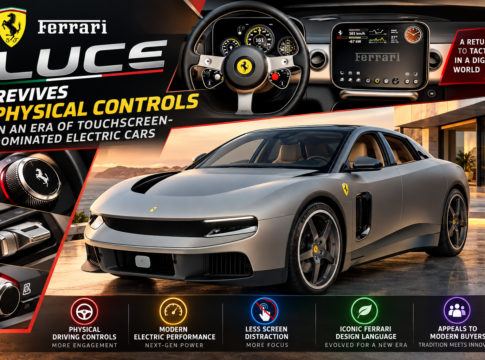

In an era where touchscreen interfaces dominate the automotive industry, Ferrari’s latest electric vehicle, the Luce, is making waves by reviving physical controls. This bold move is part of a collaboration with renowned designer Jony Ive and his firm, LoveFrom, emphasizing a tactile interaction philosophy. This article delves into the details of Ferrari Luce’s design, its implications for human-machine interfaces, and the future of automotive controls.
Key Highlights
- Ferrari Luce was revealed on October 7, 2026, marking a significant shift in Ferrari’s design philosophy.
- The design is a result of a collaboration with Jony Ive’s LoveFrom, focusing on tactile interaction.
- Built on an advanced electric platform, the Luce integrates traditional controls with modern technology.
- Emphasizes physical controls to enhance driver engagement and reduce screen dependency.
- Features include rotary dials, tactile buttons, and a minimalist dashboard layout.
- Performance details remain under wraps, sparking curiosity and anticipation.
- Understanding the balance between human-machine interfaces and tactile feedback.
- How tactile controls can potentially reduce driver distraction compared to touchscreens.
- The concept of affordance in physical controls versus digital interfaces.
- Challenges of screen dependency in modern electric vehicles.
- Implications of EV packaging on interior design and control placement.
In conclusion, Ferrari’s Luce represents a bold step in redefining the driving experience by reviving physical controls in an era dominated by touchscreens. This approach not only enhances driver engagement but also addresses safety concerns associated with screen dependency. As the automotive industry evolves, the Luce’s design philosophy may inspire other manufacturers to reconsider the balance between tactile and digital interfaces.“The Ferrari Luce challenges the status quo by reintroducing physical controls, offering a tactile experience that many modern vehicles lack.” – Automotive Design Expert