
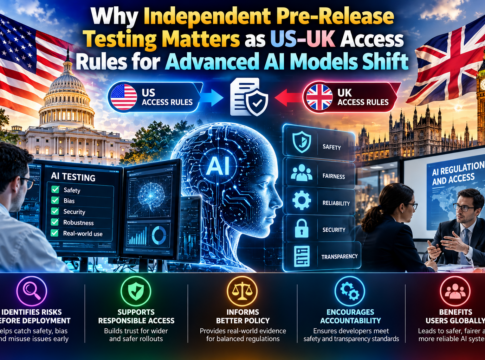

In a rapidly evolving digital landscape, the importance of independent pre-release testing for advanced AI models has never been more critical. As reported by Reuters on October 11, 2026, a significant policy shift allows American developers to provide early access to their AI models to Britain’s AI Security Institute. This development underscores the need for rigorous testing protocols to ensure the safe deployment of AI technologies across borders.
Key Highlights
- Publication Date: October 11, 2026, as reported by Reuters.
- Policy Shift: American developers can now offer early model access to the UK’s AI Security Institute.
- Institute’s Role: The AI Security Institute is tasked with testing AI models before public deployment.
- Pre-Deployment Access: Early access is crucial for evaluating potential risks and capabilities.
- Participating Companies: Several unnamed American AI developers are involved in this initiative.
- Absent Official Responses: No official comments from US or UK government bodies were reported.
- Unconfirmed Elements: The policy change has not been independently verified beyond the report.
- Evaluation Access: Understand the significance of granting early access for thorough evaluation.
- Capability Testing: Learn how testing can reveal a model’s strengths and weaknesses.
- Misuse Testing: Explore methods to identify potential misuse scenarios.
- Confidentiality: Discover the importance of maintaining confidentiality during testing phases.
- Model Weights: Gain insights into the handling and protection of model weights.
- Regulatory Sandboxes: Examine the role of regulatory sandboxes in facilitating safe AI development.
- Cross-Border Cooperation: Understand the benefits of international collaboration in AI governance.
- Establish clear testing protocols to evaluate AI models thoroughly.
- Ensure confidentiality agreements are in place to protect sensitive information.
- Utilize regulatory sandboxes to test models in controlled environments.
- Foster international cooperation to share best practices and insights.
- Implement continuous monitoring and feedback loops post-deployment.
- What are the differences between voluntary and compulsory testing protocols?
- How can international cooperation enhance AI model safety?
- What measures can be implemented to ensure confidentiality during testing?
- How do regulatory sandboxes contribute to safer AI deployment?