
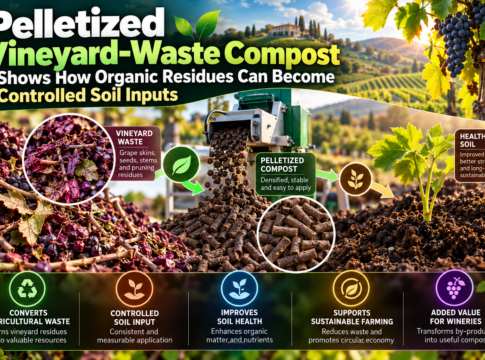

Pelletized vineyard-waste compost is revolutionizing how organic residues are transformed into controlled soil inputs. A recent study, published on October 5, 2026, explores the use of pelletized compost and vermicompost derived from vineyard pruning material and treated sewage sludge in lettuce cultivation. This innovative approach not only enhances soil health but also supports sustainable agricultural practices. Let’s delve into the study’s findings and implications for the future of circular agriculture.
Key Highlights
– The study utilized vineyard pruning material and treated sewage sludge to create compost and vermicompost.
– These organic residues were processed into pellet form, facilitating easier handling and application.
– The pellets were tested in a lettuce cultivation setting to assess their effectiveness.
– Soil and plant measurements were conducted to evaluate nutrient release and plant growth.
– Short-term outcomes indicated improved soil structure and nutrient availability.
– Safety questions were addressed, focusing on potential contaminants from sewage sludge.
What You Will Learn
– The process of composting and vermicomposting vineyard waste and sewage sludge.
– How pellet density affects nutrient release and soil integration.
– The role of organic matter in enhancing soil fertility and structure.
– Methods for contaminant testing to ensure safety in agricultural applications.
– The principles of circular agriculture and its benefits for sustainable farming.
How and Why It Works
Stabilization and pelletization of organic residues transform them into manageable and efficient soil inputs. The pellet form allows for controlled nutrient release, reducing the risk of nutrient leaching and ensuring a steady supply of nutrients to plants. This process also enhances the physical properties of the soil, promoting better root growth and water retention.
Practical Applications
Growers looking to adopt this innovative approach should use certified pelletized compost products. Conducting soil tests before application ensures compatibility and effectiveness. Following label rates and using protective gloves during handling are recommended for safety. Starting with small field strips can help assess the product’s impact before full-scale application.
Limitations and Misconceptions
It’s crucial to understand that products derived from sewage sludge require regulatory approval and thorough contaminant testing. These products should not be recreated casually, as improper handling can lead to environmental and health risks. Always rely on certified products and adhere to safety guidelines.
Learning Takeaways
– Evaluate recycled soil inputs using a checklist that includes nutrient content, contaminant levels, and regulatory compliance.
– Understand the importance of pellet density and its impact on nutrient release.
– Recognize the role of organic matter in soil health and plant growth.
– Embrace circular agriculture as a sustainable farming practice.
In conclusion, the study on pelletized vineyard-waste compost demonstrates a promising pathway for transforming organic residues into valuable soil inputs. By adhering to safety standards and leveraging certified products, growers can enhance soil health and contribute to sustainable agriculture. This approach not only supports plant growth but also aligns with the principles of circular agriculture, paving the way for a more sustainable future.