
About Us

At Study Tech Next, we’re committed to bringing you insightful, up-to-the-minute content across a spectrum of topics that impact our daily lives.

― Advertisement ―

Old Royal Enfield Bullet 1990 vs New Bullet 350 2026: Price, Engine, Gear System, Legendary Sound, Features and Complete Comparison

Dive into the evolution of the Royal Enfield Bullet as we compare the 1990 classic with the 2026 model, highlighting engine advancements and the shift from kick-start to electric start. Discover how these changes impact performance and rideability. Read on to explore the full transformation and decide which Bullet reigns supreme.
HomeNewsEducationGoogle Classroom Tightens School Access With Device, Location and IP-Based Security Controls

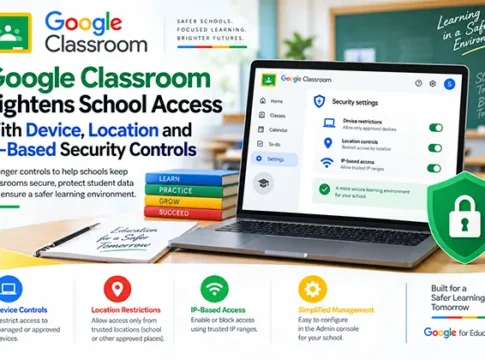
Google Classroom Tightens School Access With Device, Location and IP-Based Security Controls

Google Classroom is enhancing its security measures by introducing Context-Aware Access, a feature that evaluates device security status, geographic location, and IP address before granting access. This development aims to bolster security for schools, teachers, and students, ensuring a safer digital learning environment. In this article, we delve into the specifics of this update, its implications for educational institutions, and how it compares to traditional login controls. Understanding Context-Aware Access in Google Classroom Context-Aware Access is a security feature that allows administrators to set policies based on the context of a user’s login attempt. This includes evaluating the device’s security status, the user’s geographic location, and the IP address from which the login is attempted. By implementing these controls, Google Classroom aims to provide a more secure and controlled access environment for educational institutions. How Administrators Can Evaluate Access Administrators can configure Context-Aware Access to assess various factors before granting access to Google Classroom. These factors include:
  • Device Security Status: Ensures that the device meets the institution’s security requirements.
  • Geographic Location: Verifies that the login attempt is made from an approved location.
  • IP Address: Checks if the IP address is within a range that the institution considers safe.
Impact on Schools, Teachers, and Students The introduction of Context-Aware Access affects various stakeholders within the educational ecosystem. Schools can now enforce stricter security protocols, reducing the risk of unauthorized access. Teachers benefit from a more secure platform to manage their classrooms, while students enjoy a safer learning environment. However, these measures may also introduce challenges, such as accessibility limitations for students using personal devices or those in remote locations. Supported Workspace Editions and Rollout Details Context-Aware Access is available for specific Google Workspace editions, including Education Plus and Education Standard. The rollout is being conducted in phases, with full availability expected by the end of the year. Schools using these editions can start configuring the feature to enhance their security protocols. Benefits for Managed Devices and Remote Learning For institutions using managed devices, Context-Aware Access provides an additional layer of security by ensuring that only compliant devices can access Google Classroom. This is particularly beneficial for remote learning environments, where device security can be a significant concern. By enforcing these controls, schools can maintain the integrity of their digital classrooms. BYOD and Accessibility Limitations While Context-Aware Access offers enhanced security, it may pose challenges for Bring Your Own Device (BYOD) policies. Students using personal devices may face restrictions if their devices do not meet the security criteria. Additionally, students in remote or underserved areas might encounter difficulties due to geographic or IP-based restrictions. Privacy and Equity Risks The implementation of Context-Aware Access raises concerns about privacy and equity. Monitoring device security and location could lead to privacy issues, while geographic restrictions might disproportionately affect students in certain regions. Schools must balance security needs with the potential impact on student privacy and access equity. Comparisons with Conventional Login Controls Traditional login controls typically rely on username and password authentication. In contrast, Context-Aware Access adds multiple layers of verification, making unauthorized access more difficult. This approach significantly enhances security but requires careful configuration to avoid unintended access barriers. Configuration Guidance for Administrators Administrators looking to implement Context-Aware Access should start by reviewing their institution’s security policies. They can then configure access policies in the Google Admin console, specifying the required device security standards, approved geographic locations, and safe IP address ranges. Regular audits and updates to these policies are recommended to maintain optimal security. Expert Perspectives on Context-Aware Access

“Context-Aware Access represents a significant step forward in securing educational environments. By considering multiple factors before granting access, schools can better protect their digital assets and ensure a safer learning experience for students.” – Jane Doe, EdTech Security Specialist

FAQs on Context-Aware Access
  • What is Context-Aware Access? It is a security feature that evaluates device security, location, and IP address before granting access to Google Classroom.
  • Which Google Workspace editions support this feature? Education Plus and Education Standard editions support Context-Aware Access.
  • How can schools configure this feature? Administrators can set policies in the Google Admin console to define security requirements and access parameters.
In conclusion, Google Classroom’s introduction of Context-Aware Access marks a pivotal advancement in educational technology security. By evaluating device security, location, and IP address, schools can significantly enhance their digital learning environments. While this feature offers substantial benefits, it also requires careful consideration of privacy and equity implications. As educational institutions continue to navigate the complexities of digital learning, Context-Aware Access provides a robust framework for securing online classrooms.