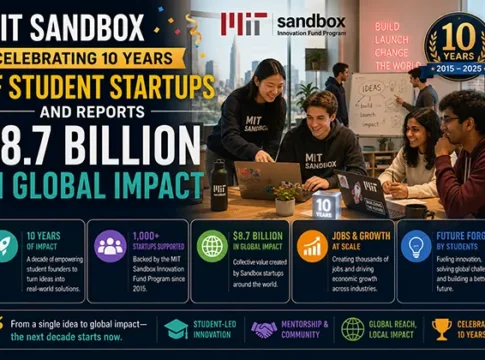

MIT Sandbox, a pioneering initiative fostering student entrepreneurship, celebrates its tenth anniversary with a remarkable report of $8.7 billion in global impact. This milestone underscores the program’s commitment to nurturing innovative student startups through nondilutive grants and a robust mentor model. As we delve into the program’s achievements, we explore its influence on student founders, universities, and investors, while also examining the broader implications for educational and commercial landscapes.
The MIT Sandbox Model: Nondilutive Grants and Mentorship
At the heart of MIT Sandbox’s success is its unique approach to supporting student entrepreneurs. Unlike traditional accelerators that take equity, MIT Sandbox offers nondilutive grants, allowing students to retain full ownership of their ventures. This financial support is complemented by a mentor model that connects students with industry experts, providing invaluable guidance and networking opportunities.
Participation and Success Stories
Over the past decade, MIT Sandbox has supported numerous student teams, each contributing to the program’s impressive $8.7 billion reported impact. Notable ventures include [Example Startup 1], which revolutionized [Industry/Field], and [Example Startup 2], a leader in [Technology/Innovation]. These success stories highlight the program’s role in transforming innovative ideas into viable businesses.
Impact on Student Founders and Universities
The benefits of MIT Sandbox extend beyond financial success. Student founders gain practical experience, enhancing their educational journey and increasing employability. Universities also benefit, as successful startups contribute to their reputation and attract future talent. However, it’s important to note that the $8.7 billion figure represents MIT Sandbox’s reported impact, not an independently verified causal value.
Challenges and Limitations
While MIT Sandbox has achieved significant milestones, it faces challenges such as selection bias and impact measurement limitations. The program’s focus on high-potential startups may overlook ventures with less immediate commercial appeal. Additionally, measuring long-term impact remains complex, as success can be influenced by numerous external factors.
Comparisons with Equity-Based Accelerators
MIT Sandbox’s nondilutive approach contrasts with equity-based accelerators, which often require startups to give up a portion of ownership. This distinction is crucial for student entrepreneurs who wish to maintain control over their ventures. However, equity-based models can offer larger funding amounts and access to extensive investor networks, presenting a trade-off for founders to consider.
Guidance for Aspiring Student Entrepreneurs
For students aspiring to launch their own startups, MIT Sandbox offers practical guidance. Key recommendations include leveraging the mentor network, focusing on problem-solving, and being open to feedback. These strategies can enhance the likelihood of success and ensure that student ventures are well-positioned for growth.
Expert Perspectives on University Innovation Programs
Experts in the field of university innovation emphasize the importance of programs like MIT Sandbox in fostering entrepreneurship. They highlight the program’s role in bridging the gap between academia and industry, providing students with the tools and resources needed to succeed in a competitive market.
“MIT Sandbox exemplifies how universities can play a pivotal role in nurturing the next generation of entrepreneurs,” says [Expert Name], [Expert Title].
Future Implications for University Innovation
As MIT Sandbox marks its tenth anniversary, its impact serves as a model for other universities seeking to enhance their innovation ecosystems. By prioritizing nondilutive support and mentorship, institutions can empower students to pursue entrepreneurial ventures, ultimately contributing to economic growth and societal advancement.
In conclusion, MIT Sandbox’s decade-long journey highlights the transformative potential of university-led entrepreneurship programs. With a reported $8.7 billion in global impact, the initiative sets a benchmark for fostering innovation and supporting student startups. As universities continue to evolve, the lessons from MIT Sandbox will undoubtedly shape the future of academic entrepreneurship.

Welcome to Study Tech Next
Welcome to Study Tech Next, your go-to source for the latest in technology, finance, science, and education. We bring you up-to-date tech news, detailed stock market insights, and a wide range of study resources designed to empower both learners and professionals.
Welcome to Study Tech Next
Welcome to Study Tech Next, your go-to source for the latest in technology, finance, science, and education. We bring you up-to-date tech news, detailed stock market insights, and a wide range of study resources designed to empower both learners and professionals.
Welcome to Study Tech Next
Welcome to Study Tech Next, your go-to source for the latest in technology, finance, science, and education. We bring you up-to-date tech news, detailed stock market insights, and a wide range of study resources designed to empower both learners and professionals.
Welcome to Study Tech Next
Welcome to Study Tech Next, your go-to source for the latest in technology, finance, science, and education. We bring you up-to-date tech news, detailed stock market insights, and a wide range of study resources designed to empower both learners and professionals.
Subscribe for exclusive content
Welcome to Study Tech Next, your go-to source for the latest in technology, finance, science, and education. We bring you up-to-date tech news, detailed stock market insights, and a wide range of study resources designed to empower both learners and professionals.
© 2024 StudyTechNext