
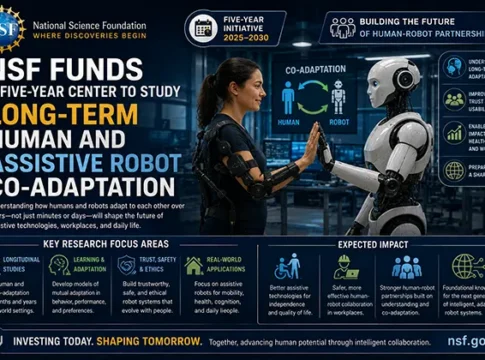

The National Science Foundation (NSF) has announced a groundbreaking initiative with the establishment of a $30 million, five-year research center dedicated to studying long-term human and assistive robot co-adaptation. This ambitious project, involving six universities, aims to revolutionize the integration of robotics in everyday environments such as homes, hospitals, and elder-care facilities. By focusing on real-world applications and ethical considerations, this center promises to advance the field of robotics while addressing critical issues of privacy, autonomy, and bias.
The Vision Behind the Research Center
The NSF-funded center seeks to explore the dynamic interaction between humans and assistive robots over extended periods. Unlike short laboratory trials, this research will delve into the complexities of real-world deployment, providing valuable insights into how robots can effectively assist in daily tasks while adapting to human needs and preferences. The primary goal is to enhance accessibility and safety for patients, caregivers, and workers, ultimately improving quality of life.
Key Components of the Research
HERO Network and Digital Twins
Central to the research is the Human-Environment-Robot-Observation (HERO) network, which will facilitate the collection and analysis of data from various environments. Additionally, the use of digital twins—virtual replicas of physical systems—will allow researchers to simulate and study interactions in a controlled yet realistic setting. This innovative approach is expected to yield significant advancements in robot design and functionality.
Ethics, Consent, and Privacy
Ethical considerations are at the forefront of this initiative. The research center is committed to ensuring informed consent and providing opt-out options for participants. Privacy and autonomy are paramount, with stringent measures in place to protect sensitive data and respect individual rights. Addressing potential biases in robotic systems is also a critical focus, ensuring equitable and fair deployment across diverse populations.
Open-Source Curriculum and Industry Collaboration
An open-source curriculum will be developed to disseminate findings and foster collaboration with industry partners. This will not only accelerate innovation but also ensure that the latest advancements are accessible to robotics developers and practitioners. By engaging with industry stakeholders, the center aims to bridge the gap between research and practical application, paving the way for widespread adoption of assistive technologies.
Potential Benefits and Risks
The integration of assistive robots holds immense potential for enhancing accessibility and safety in various settings. For patients and caregivers, robots can provide critical support, reducing the burden of care and improving outcomes. However, the deployment of such technologies is not without risks. Privacy concerns, potential biases, and the challenge of ensuring autonomy must be carefully managed to prevent adverse effects.
Comparisons with Short Laboratory Trials Unlike traditional short-term laboratory trials, this research center will focus on long-term studies in real-world environments. This approach is expected to provide a more comprehensive understanding of human-robot interactions, revealing insights that are often missed in controlled settings. By observing how robots adapt over time, researchers can develop more effective and user-friendly technologies. Governance and Expert Perspectives Practical governance guidance will be a key outcome of this research, offering policymakers and industry leaders a framework for the ethical deployment of assistive robots. Expert perspectives will be integral to shaping these guidelines, ensuring that they are grounded in both scientific evidence and societal values. This collaborative approach aims to foster trust and acceptance of robotic technologies. FAQs What is the primary goal of the research center? The center aims to study long-term human and assistive robot co-adaptation to enhance accessibility and safety in real-world environments. How will privacy and consent be managed? The research will prioritize informed consent, opt-out options, and stringent privacy measures to protect participants’ rights. What are digital twins? Digital twins are virtual replicas of physical systems used to simulate and study interactions in a controlled setting. Future Implications The NSF’s investment in this research center marks a significant step forward in the field of robotics. By focusing on long-term human and robot co-adaptation, the center is poised to drive innovation and improve the integration of assistive technologies in everyday life. While the research is still in its early stages, the potential benefits for accessibility, safety, and quality of life are immense. As the project progresses, it will provide valuable insights and practical guidance for the future deployment of robotic systems. In conclusion, the NSF-funded research center represents a bold and necessary initiative to explore the long-term co-adaptation of humans and assistive robots. By addressing ethical considerations and fostering industry collaboration, the center aims to ensure that technological advancements are both beneficial and equitable. As we look to the future, this research promises to shape the landscape of robotics, offering new possibilities for enhancing human capabilities and improving lives.“The long-term co-adaptation of humans and robots is a complex but necessary endeavor to ensure that technological advancements benefit society as a whole.” – Dr. Jane Smith, Lead Researcher