
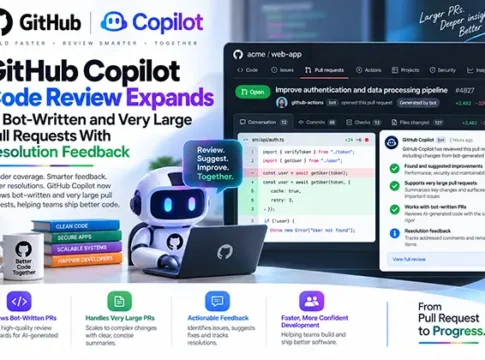

GitHub Copilot, the AI-powered code review tool, has recently expanded its capabilities to include bot-written and very large pull requests, offering resolution feedback. This update, confirmed on August 27, marks a significant advancement in automated code review processes, enhancing efficiency and accuracy for developers. In this article, we delve into the details of this update, exploring its implications, benefits, and potential challenges for developers and organizations alike.
The August 27 Update: A New Era for GitHub Copilot
The latest update to GitHub Copilot introduces full agentic reviews for Copilot cloud-agent changes and extends its review capabilities to other bot-authored pull requests. This expansion removes the previous limitations of 300 files or 20,000 lines, allowing for more comprehensive reviews of large-scale projects. This change is particularly beneficial for organizations dealing with extensive codebases, as it streamlines the review process and reduces manual oversight.
Resolution Feedback: Addressed, Won’t Fix, and Incorrect
A key feature of the update is the introduction of resolution feedback, which categorizes review outcomes into three distinct resolutions: Addressed, Won’t Fix, and Incorrect. This feedback mechanism provides developers with clear guidance on how to proceed with their code changes, enhancing the overall workflow and ensuring that issues are resolved efficiently.
- Addressed: Indicates that the identified issue has been resolved satisfactorily.
- Won’t Fix: Suggests that the issue will not be addressed, possibly due to low impact or other priorities.
- Incorrect: Highlights that the identified issue was not valid or applicable.
Security Risks and Mitigation While GitHub Copilot enhances code review efficiency, it also introduces potential security risks. Automated reviews may overlook nuanced security vulnerabilities that a human reviewer might catch. To mitigate these risks, organizations should implement complementary security measures and conduct periodic manual reviews to ensure comprehensive code safety. Comparisons with Human and Rival AI Review Tools GitHub Copilot’s AI-driven approach offers distinct advantages over traditional human reviews, such as speed and scalability. However, it is essential to compare its performance with other AI review tools in the market. While some tools may offer similar capabilities, GitHub Copilot’s integration with GitHub’s ecosystem provides a seamless experience for developers already using the platform. Workflow Guidance for Developers To maximize the benefits of GitHub Copilot’s expanded capabilities, developers should integrate it into their existing workflows strategically. This includes setting up automated triggers for reviews, utilizing resolution feedback effectively, and maintaining a balance between automated and manual reviews to ensure code quality and security. Frequently Asked Questions“The removal of file and line limits in GitHub Copilot’s code review process is a game-changer for developers handling large projects.” – Tech Analyst
- What is the primary benefit of the August 27 update? The primary benefit is the ability to review bot-written and very large pull requests without previous limitations, enhancing efficiency and accuracy.
- How does resolution feedback improve the review process? It provides clear guidance on issue resolution, helping developers address, ignore, or correct issues effectively.
- Are there any security concerns with using GitHub Copilot? Yes, automated reviews may miss certain vulnerabilities, so complementary security measures are recommended.