
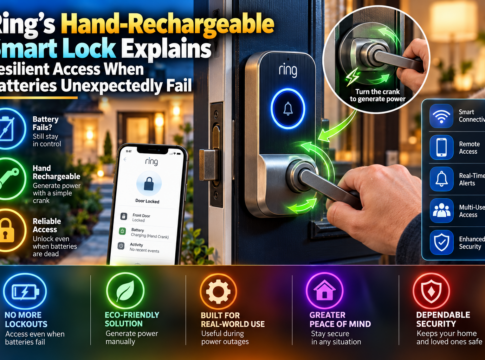

Ring has unveiled a groundbreaking innovation in smart home security with its new hand-rechargeable smart lock, announced on October 7, 2026. This smart lock is designed to provide resilient access even when batteries unexpectedly fail, ensuring homeowners are never locked out. By using an emergency power dial, users can generate enough energy for device-level unlocking, making it a reliable choice for modern households. In this article, we delve into the key highlights, functionalities, and practical applications of this innovative smart lock, while also addressing its limitations and future implications.
Key Highlights
- Announcement Date: October 7, 2026
- Expected Availability: 2027
- Emergency Charging Method: Hand-rechargeable power dial
- Access Options: Device-level unlocking via generated energy
- Ecosystem Requirements: Compatible with existing Ring systems
- Unknown Pricing: Details to be announced
- Security Questions: Concerns about data privacy and physical security
- Stored Energy: How the lock stores energy for emergency use
- Mechanical Fallback: Manual unlocking options
- Local Authentication: Ensuring secure access without internet
- Remote Access: Managing the lock from afar
- Household Permissions: Customizing access for family members
- Battery Alerts: Notifications for low battery levels
- Failure Planning: Strategies for when technology fails
- Lock Installation: Ensure compatibility with existing door hardware and Ring systems.
- Access Recovery: Use the emergency power dial to regain entry during power failures.
- Guest Code Checklist: Set up temporary access codes for visitors and service providers.
- Resilient-Smart-Lock Buying Checklist: Evaluate compatibility, emergency features, and security protocols before purchasing.
- Consider privacy implications and ensure the lock meets your security needs.
- Plan for regular maintenance and have a backup entry strategy.